Home  ›  Football Casuals  ›  Football Casuals Brands

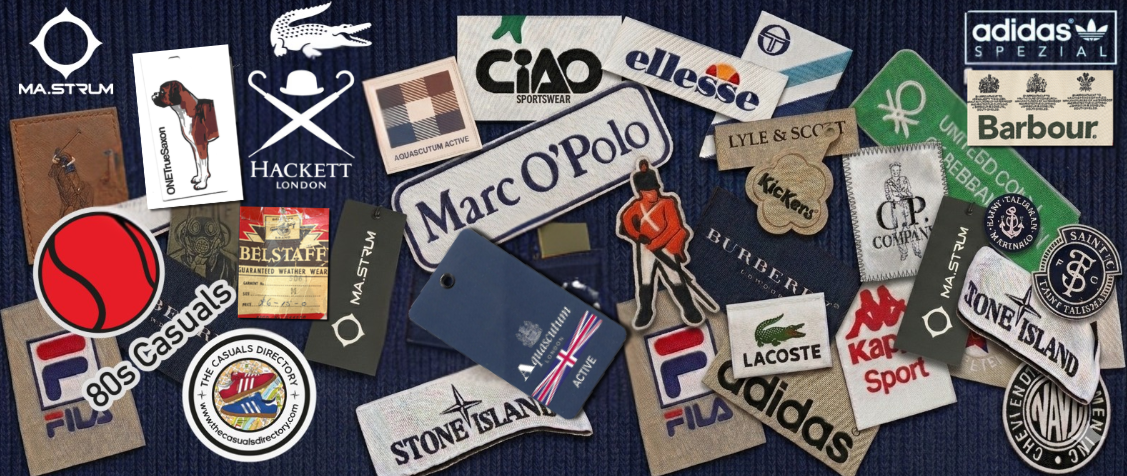
Football casuals brand labels — Stone Island, CP Company, Fila, Lacoste, Adidas, Ellesse, Kickers, Burberry, Lyle and Scott, MA.Strum, Kappa, Aquascutum, 80s Casuals, Hackett London

The Casuals Directory — Est. 2007

Football Casuals Brands

The complete guide to the labels that defined terrace fashion — from the Italian sportswear smuggled back from European aways in the 1970s to the modern brands carrying the casual torch today.

40+ Brands — Est. 2007

Football Casuals Brands — The Complete Terrace Fashion Guide

Football casuals brands have shaped British menswear for over four decades. From the Italian sportswear smuggled back from European away trips in the late 1970s — Fila, Ellesse, Sergio Tacchini — to the premium British and Italian labels that followed, the casual scene created one of the most distinctive and influential style cultures Britain has ever produced.

At its heart, the football casual brand philosophy was simple: quality over noise, rarity over recognition. Stone Island and C.P. Company became the ultimate status labels precisely because most people didn't know what they were. Adidas models were hunted in obsessive detail — the rarer the colourway, the better.

The Casuals Directory has been covering terrace fashion brands since 2007. Below is our complete guide to every major label associated with the football casual scene — from the founding originals to the modern brands carrying the tradition forward today.

0–9 ABCD EFGH IJKL MNOP QRST UVW
0–9
6876 Est. 1995 British

Founded in 1995 by menswear designer Kenneth MacKenzie, 6876 is built on a philosophy of rigorous product development, functional integrity and modernist design. The name is drawn from two pivotal years — the Paris student riots of 1968 and the birth of punk in 1976.

MacKenzie is a genuine football fan whose understanding of the culture runs deep, and it shows. The brand has earned a strong following among casuals, particularly for its outerwear. The Capandula and Sonara jackets have become collector's items — functional, beautifully constructed and rooted in the kind of understated quality that the casual scene has always valued.

80's Casuals Est. 2003 British

Launched in 2003 by people who were actually there — lads who went to the game during the defining era of the 1980s casual scene. The brand's mission was simple: bring well-priced, quality product to like-minded souls who understood the culture from the inside.

Drawing its inspiration from the last great revolution in British menswear, 80's Casuals is widely acknowledged as the first dedicated terrace label in the UK. Over the years it has expanded beyond clothing into film and music-related product, building a genuine cultural platform around the casual story.

A
Adidas Originals Est. 1949 German

No brand is more central to football casual culture than Adidas. The Trefoil logo — applied exclusively to Originals heritage product since 1997 — became a symbol of authenticity on the terraces, where rare and obscure adidas models were hunted with obsessive dedication.

The story of adidas in casual culture begins in the mid-1970s, when football supporters who had previously worn Dr. Martens were required to leave boots outside stadium entrances. The response was to reach for something better — and adidas delivered. The Stan Smith, Samba, Gazelle and Spezial became the cornerstones of the casual trainer wardrobe. The rule was simple: the rarer the colourway, the better.

Shop Adidas SPZL SS26 →
Adidas Spezial Est. 2013 German / British

The adidas Spezial (SPZL) sub-label was born from a genuine passion for the brand's archive — and it shows in every release. Headed up by Gary Aspden and rooted in Northern England's terrace culture, SPZL has become the most coveted casual drop of every season.

Each collection revisits archival silhouettes with premium materials and considered detailing — endorsed by cultural figures like Noel Gallagher and Ian Brown. The SPZL line is sold exclusively through specialist independent retailers, making every drop genuinely limited.

View SPZL SS26 →
Aquascutum Est. 1851 British

Founded in a Mayfair tailors in 1851 by John Emary, Aquascutum — Latin for "water shield" — built its reputation on fine craftsmanship and the invention of waterproof wool. The brand dressed royalty, film stars and politicians across its long history.

In the casual world, Aquascutum became known primarily for its iconic check scarf — a more accessible alternative to the Burberry equivalent and a staple among well-dressed casuals from the late 1990s onwards. Often worn alongside a CP Company Goggle Jacket, the Aquascutum scarf became a mark of understated taste. Its popularity grew precisely as top firms were moving away from club colours to avoid police identification.

Albam Est. 2006 British

Founded in 2006, Albam is a contemporary British menswear brand defined by its timeless utilitarian design philosophy and commitment to quality construction. Working with some of the finest craftsmen and factories in the UK and Europe, Albam produces four collections a year of original, modern essentials — understated designs in premium fabrics with impeccable fit and finish. A brand built on exactly the values the casual scene has always admired.

Armand BasiEst. 1940sSpanish

A Spanish fashion and lifestyle brand founded in Barcelona by Mercedes Basi, who built her reputation on premium knitwear crafted from high-quality Scottish yarn. By 1958 her sons Armand and Josep had taken the reins, establishing the brand's first factory and expanding its knitwear offer across Europe, North America and Asia. Armand Basi's premium knitwear found a following among casuals who valued European quality in their off-the-pitch wardrobe.

A Bathing Ape (BAPE)Est. 1993Japanese

Founded in Tokyo in 1993 by Nigo, A Bathing Ape became one of the defining Japanese streetwear brands — its iconic camouflage patterns, shark graphics and Bapesta trainers crossing over from Tokyo's underground scene into the broader global streetwear market. While not a traditional casual brand, BAPE's cult exclusivity and limited drops resonated with collectors who operated on the same logic as the original casual trainer hunters.

Australian L'Alpina Est. 1946 Italian

Originally founded in 1946 by Leardo Gabrielli, the L'Alpina brand dominated the fashionable tennis circuit through the late 1950s and early 60s — a benchmark of contemporary styling and Italian craftsmanship. The distinctive kangaroo motif became the brand's calling card as the range extended from the tennis court into leisure wear, and the Australian name was born. Still designed and manufactured in Italy today, the retro L'Alpina range remains the ultimate expression of classic Italian sporting style.

B
Basläger Clothing CoEst. 2015British

A Scandinavian-inspired independent British label founded in 2015, Basläger draws its identity from music, fashion, outdoor culture and the casual scene. The brand produces high-quality, affordable basics with a clean, considered aesthetic, and takes its charitable responsibilities seriously — supporting Dementia UK, Help the Homeless, Water Aid UK and several environmental causes from its profits.

Baracuta Est. 1937 British

Baracuta is a British brand with deep subcultural roots, best known for creating the iconic G9 Harrington Jacket — a garment worn by Steve McQueen, Frank Sinatra and Elvis Presley, and adopted by the England squad at the 1970 World Cup. The G9 is instantly recognisable by its Fraser Tartan lining and signature collar, and has become synonymous with British youth movements from Mods to Skinheads to Casuals. Few garments carry quite so much cultural weight in a single zip.

Barbour Est. 1894 British

The Barbour story began in 1894 in South Shields, and the fifth-generation family business still produces its classic wax jackets by hand at the same location today. A brand rooted in the British countryside, Barbour found an unlikely second home on the terraces of the early 1980s — its combination of quality, practicality and understated British identity making it a natural fit for the casual aesthetic.

The most popular models among casuals have been the Beaufort, Border, Bedale, Moorland, Northumbria and Liddesdale. Classic Barbour tartan scarves have also been a long-standing terrace favourite. A jacket that works at the match, at work and in the pub — the casual ideal.

Belstaff Est. 1924 British

Founded in 1924 in Stoke-on-Trent, Belstaff pioneered water-resistant wax cotton and built a reputation for outerwear that could take anything the world threw at it. The brand's classic belted 4-pocket wax jacket became a twentieth-century icon worn by everyone from T.E. Lawrence and Amelia Earhart to David Beckham and Tom Hardy. In the casual world, Belstaff represents the premium end of heritage British outerwear — a brand with genuine adventure in its DNA.

Ben Sherman Est. 1963 British

Ben Sherman made its name in the 1960s with fashionable button-down collared shirts, quickly becoming a staple of Mod culture. In the decades since, the brand has been adopted by virtually every major British youth movement — from two-tone and ska through to Britpop and beyond. The distinctive RAF roundel "mod target" remains a recognisable symbol of British subcultural identity, and the Ben Sherman shirt continues to hold its place in the casual wardrobe as a clean, quality British classic.

Benetton Est. 1965 Italian

Founded in 1965 in Ponzano Veneto, Benetton became a defining label of 1980s Italy — its bold colours and United Colors of Benetton campaigns as much a part of the decade's visual identity as any sportswear brand. It was a natural hit with both Italian Paninaro culture and British football casuals for its crisp, colourful and youthful style. The rugby shirt was a regular sight on away days alongside other Italian imports like Fila, Ellesse and Sergio Tacchini.

Berghaus Est. 1966 British

Despite the Germanic name — a deliberate choice to appeal to European mountain markets — Berghaus is a firmly British brand, founded in Newcastle and now based in Sunderland. Peter Lockey and Gordon Davison began by importing outdoor gear before developing their own, and the brand went on to pioneer GORE-TEX technology in waterproof products in 1977. Its fleeces and waterproof jackets became popular on the terraces for the same reason they worked on mountain faces: they were built to handle whatever British weather could throw at them.

Best Company Est. 1982 Italian

Founded in 1982 by Olmes Carretti, Best Company took the raw energy of American sportswear classics and refined them through a distinctly Italian lens — clean lines, pastel hues and a quality that set them apart. The brand was a firm favourite with Italy's Paninaro youth culture and was quickly adopted by the warehouse-raving, football-watching youth of the North West of England. After a period of absence, Best Company has returned — and the casual world has welcomed it back.

Boneville Est. 1981 Italian

Launched in 1981 by the legendary Massimo Osti — the designer also responsible for C.P. Company and Stone Island — Boneville was created as an outlet for the extraordinary volume of ideas that Osti's mind generated each season. Running from its founding until 1993, the brand pushed boundaries both aesthetically and technically, setting benchmarks in men's fashion that still resonate today.

In 2012, entrepreneur John Sharp acquired the Boneville name with a view to reviving the Osti legacy. The result is a modern Boneville that embraces Osti's ethos of innovation and research-led design, featuring two divisions — Boneville and B.N.V. Sporting Goods — united by a distinctive naval and maritime character.

Burberry Est. 1856 British

Thomas Burberry opened his first store in Basingstoke in 1856, inventing gabardine fabric and pioneering the trench coat — a garment that became a global icon thanks in part to Humphrey Bogart in Casablanca. Burberry's famous check pattern became one of the most recognisable motifs in British fashion, and the brand's association with the casual scene — particularly through its check scarf — gave the heritage label an unexpected edge. The Burberry scarf became the premium terrace alternative to Aquascutum, a clear signal of taste and status among discerning casuals.

C
Casual Connoisseur Est. 2006 British

Founded in 2006 in the North West of England, Casual Connoisseur is a brand shaped by the full breadth of working-class cultural life — art, film, music, football, outdoor pursuits and everything in between. The brand produces limited edition, high-quality textiles that combine timeless style with modern influences, guided by the twin founders' commitment to traditional working-class values. As they put it: "We Do What We Like & We Like What We Do."

Cerutti 1881 Est. 1881 Italian / French

The Parisian fashion house with Italian roots, Cerutti 1881 built its reputation on the finest wool, textiles and tailoring. The brand's commitment to premium fabrics and impeccable craftsmanship gave it a natural home in the casual wardrobe of the discerning 1980s fan — a label worn by those who took the quality of their clothing as seriously as the game itself.

CiaoEst. 1980sItalian

An Italian designer clothing brand that became part of the Paninaro look adopted by British football casuals in the late 1980s. The brand embodied the colourful, logo-heavy Italian aesthetic that crossed the Alps and the Channel to define a particular strand of the casual style — bright, sharp and unmistakably Continental.

ChipieEst. 1967French

Founded in 1967 in Carcassonne by the 17-year-old Jean-Michel Signoles, Chipie built its identity on premium denim and a strong design philosophy that made labels a visible, deliberate part of the garment rather than simply a tag. One of the first brands to wear its identity on the outside, Chipie became an influential French youth brand that reached British casual circles through its European cachet and denim credentials.

Clarks OriginalsEst. 1825British

Founded in Somerset in 1825, Clarks produced footwear history with the Desert Boot in 1950 — a simple suede ankle boot inspired by Cairo bazaar footwear that became one of the most culturally adopted shoes in British history. Worn by Mods, Skinheads, football casuals and Britpop kids, the Desert Boot represents exactly what the casual scene values: understated quality, genuine heritage and a silhouette that never goes out of style. The Wallabee, introduced in 1967, completed Clarks' casual credentials.

CLOSERThanMOSTContemporaryBritish

A contemporary British label producing limited, cult clothing inspired by working-class subculture movements. CLOSERThanMOST operates at the intersection of the terrace, the street and British underground culture — small runs, strong identity and a clear understanding of the scene it speaks to.

C17Est. 1972French

A French denim brand founded in 1972 that found its audience through the 1980s and 1990s among young football fans across Europe seeking stylish Continental alternatives to mainstream British high street labels. C17's focus on premium European denim with a subtle stylistic edge gave it genuine credibility in casual circles, and the brand has since been revived with that original spirit intact.

C.P. Company Est. 1975 Italian

Founded by the visionary Massimo Osti in 1971 as Chester Perry and renamed C.P. Company in 1978, this is one of the defining brands of football casual culture. Osti pioneered garment dyeing — the first brand in the world to dye fully finished garments — producing clothing of extraordinary chromatic depth and a worn-in quality that felt instantly personal.

The brand arrived on British terraces in the mid-1980s and was immediately embraced by those who recognised something genuinely different. The iconic Goggle Jacket and the legendary Mille Miglia — first produced for the 1988 vintage car race — became the holy grail of casual outerwear. More than four decades on, the brand continues to pioneer fabric innovation while remaining the connoisseur's choice on the terrace.

Shop C.P. Company →
D
Daniel Poole Est. 1990s British

The original London streetwear label of the 1990s, Daniel Poole grew alongside the digital revolution to dress popstars, DJs and street-savvy youth globally. The brand's reinvention of the MA-1 bomber jacket — a silhouette with roots in 1950s military wear, revived by Mods, Skinheads, Punks and Ravers — brought a sharp, innovative take to a classic form and earned genuine cult status.

Destroy / John RichmondEst. 1987British

While the big international houses dressed yuppies in the 1980s, British designer John Richmond was dressing the street-savvy younger consumer. Endorsed by Madonna, Mick Jagger and Alice Cooper, Richmond's mainline was complemented in 1987 by Destroy — an affordable diffusion line of T-shirts and jeans aimed squarely at club and street culture. A label that understood its audience from the inside.

Diadora Est. 1948 Italian

Founded in Caerano di San Marco in 1948, Diadora spent decades building a reputation for high-performance Italian sports footwear before the casual era discovered it. Celebrity endorsement from tennis stars like Björn Borg and John McEnroe heightened the brand's desirability in the early 1980s — and on British terraces, the rarer the Diadora model, the greater the respect it commanded.

The Diadora B.Elite and Borg-endorsed models became particularly coveted — a brand where limited supply and Continental quality combined to create genuine status. Diadora remains an underground favourite within British subculture to this day, respected by those who know their terrace history.

E
Edwin Est. 1947 Japanese

Founded in Japan in 1947 by Mr. Tsunemi with a passion for denim, Edwin went on to produce the world's heaviest ring-spun denim jeans and pioneered the 'old wash' in the 1970s — the first brand in the world to replicate the look of well-worn denim from new. A decade later, Edwin invented stone washing, revolutionising the entire global denim industry. A forward-thinking brand with genuine innovation at its core, Edwin's Japanese craftsmanship and countercultural outlook found an appreciative audience among discerning casuals who valued quality over everything.

Ermenegildo ZegnaEst. 1910Italian

Founded in Trivero, northern Italy in 1910 with a simple ambition: to create the most beautiful fabrics in the world. Zegna built a global reputation on the finest Italian wool and cashmere, becoming the benchmark for premium men's tailoring. While not a streetwear brand, Zegna's influence on the upper end of the casual wardrobe — particularly its knitwear and luxury casualwear — has been significant among casuals who extended their taste into proper menswear.

Ellesse Est. 1959 Italian

Founded in Perugia in 1959 by Leonardo Servadio, Ellesse began as a ski and tennis brand before finding its way onto the terraces of British football grounds in the early 1980s. The distinctive half-ball logo — representing both a ski slope and a tennis ball — became one of the most recognisable symbols of the casual era.

Ellesse tracksuits, polo shirts and ski jackets carried an Alpine cool that no domestic British brand could match. Worn by lads who'd brought it back from European away trips or found it in specialist shops, an Ellesse tracksuit top was a genuine statement of knowing — the Continental taste that defined the casual scene at its peak.

Shop Ellesse →
F
Fila Est. 1911 Italian

Founded in Biella in 1911, Fila established itself as a premium Italian sports brand before the casual era transformed its audience entirely. Introduced to British terraces via Liverpool fans returning from European competition in the late 1970s and early 1980s, Fila became one of the defining labels of early casual culture.

The BJ tracksuit — named after tennis star Björn Borg — became one of the most coveted garments of the era. Fila polo shirts, tracksuits and tennis wear all carried a Continental authority that resonated deeply with casuals who valued the rare over the obvious. A brand that arrived on these shores with genuine mystique.

Shop Fila →
Fred Perry Est. 1952 British

Named after the three-time Wimbledon champion, Fred Perry launched its now-iconic polo shirt in 1952. The laurel wreath logo became the foundation garment for the Perry Boys of Manchester and the broader casual subculture — a British label with the quality and the provenance to stand alongside Italian imports.

The Fred Perry polo has been adopted by virtually every British youth movement from Mods to Skinheads to Casuals — its clean lines and understated British identity giving it a versatility that few garments can match. The brand remains a genuine casual essential more than seven decades after its founding.

Shop Fred Perry →
G
Giorgio Armani Est. 1975 Italian

Giorgio Armani launched his eponymous label in 1975 and went on to revolutionise menswear with his deconstructed tailoring and emphasis on relaxed, luxurious elegance. While not a terrace brand in the traditional sense, Armani — particularly through the Emporio and A|X Armani Exchange lines — found a following among upwardly mobile casuals in the late 1980s and 1990s who were extending the casual look beyond sportswear into designer menswear proper.

Gabicci Est. 1960s British / Italian

Gabicci's story begins with founders Jack Sofier and Alex Pyser, who brought Italian-inspired styling to the UK after a visit to the coastal town of Gabicci Mare. The brand's defining look — Italian tailoring with a soulful edge, unique fabrics, distinctive buttons and the iconic heavy gold 'G' — found devotees across a remarkable spread of British subcultures: Mods, Rude Boys, Suedeheads, Northern Soul and Acid Jazz aficionados all claimed it as their own. That kind of cross-cultural appeal is rare and earned. A brand with genuine soul.

Grand Alliance Contemporary British

Grand Alliance is a British premium menswear brand drawing its inspiration from the rich heritage of British music, history and culture. Built around a classic British aesthetic with a contemporary edge, the brand produces jackets, polos, overshirts, T-shirts and hats that speak directly to the modern man who appreciates timeless British style.

The brand's collections — including signature dogtooth and heritage ranges — blend classic sophistication with contemporary flair, making it a natural fit for the casual wardrobe. A label rooted in the same love of British culture and quality craftsmanship that has always driven the casual scene forward.

Visit Grand Alliance →
H
Henri Lloyd Est. 1963 British

Founded in Manchester in 1963, Henri Lloyd built its reputation on high-performance sailing wear before the casual scene discovered its technical quality and adopted it as its own. The brand's zip-up jackets and cagoules became particularly popular on the terraces through the 1980s and 1990s — functional, well-made and carrying the same understated quality ethic that defined the casual look at its best. A genuine Manchester original worn by lads from both sides of the city.

Hackett London Est. 1983 British

Founded by Jeremy Hackett after years spent working on Savile Row, Hackett London was built on a love of quintessential British menswear — tailoring, quality and the kind of understated Englishness that never dates. From the mid-1990s the brand found genuine favour on London terraces, with Hackett polo shirts and knitwear joining Lacoste, Stone Island and Ralph Lauren as labels worn by a new generation of discerning casuals. The brand's St George's cross knitwear became particularly associated with the era.

Halti Est. 1976 Finnish

Finnish outdoor brand Halti has been producing high-performance outdoor and sportswear since 1976, guided by Scandinavian values of simplicity, balance and timeless design. While not a traditional terrace brand, Halti's technical outerwear and fleeces found an audience among casuals who valued functional, well-made clothing from outside the usual continental sportswear circuit — the same instinct that drew the scene to Berghaus and Henri Lloyd.

Hugo Boss Est. 1924 German

The German fashion house founded in 1924 became a significant presence in the casual wardrobe from the 1980s onwards, particularly through its Boss Orange and Hugo lines. Clean, structured German design with premium fabrics gave Boss a natural home in the casual aesthetic — sharp enough for a night out, understated enough for the terrace. The brand's polo shirts, knitwear and outerwear remain popular with casuals today.

I
Iceberg Est. 1974 Italian

Founded in 1974 by Silvano Gerani and Giuliana Marchini, Iceberg is an Italian luxury fashion house that built its identity around fashionable sportswear with a Pop Art sensibility — bold graphics, bright colours and an irreverent take on Italian luxury. Knitwear was the brand's foundation before it expanded into wider ready-to-wear, and its sports-inspired aesthetic made it a natural discovery for football casuals who were already drawn to the Italian sportswear universe. A more expressive alternative to the understated end of the casual spectrum.

K
Kappa Est. 1967 Italian

Founded in Turin in 1967, Kappa became one of the most recognisable Italian sportswear brands of the 1980s through its strong association with football — both on the pitch and on the terraces. The brand's distinctive back-to-back sitting figures logo became a familiar sight in casual circles, particularly through its tracksuits and polo shirts. Kappa's Italian heritage and sports associations gave it genuine credibility on the terraces among casuals who valued the Continental connection.

L
Lacoste Est. 1933 French

Founded by tennis legend René Lacoste in 1933, the French brand with the iconic crocodile logo became one of the most significant labels in casual culture — communicating Continental taste and sporting provenance without advertising itself loudly. The Lacoste polo shirt, worn with the collar up in true casual fashion, was one of the defining garments of the early 1980s terrace scene.

Liverpool fans brought Lacoste back from European away trips alongside Fila and Sergio Tacchini, and the brand immediately resonated. It carried exactly the right combination of quality, rarity (at the time) and Continental authority that casuals valued above everything else.

Shop Lacoste →
Lambretta Est. 1997 British

Launched in 1997 and drawing inspiration from the Mod scene of 1960s Britain and the world-famous Lambretta scooter, Lambretta Clothing built a brand around the intersection of British subculture, music and terrace fashion. While rooted in Mod heritage, the brand has always moved with the times — covering a wide spectrum of British styles and supporting the subcultures that have defined the country's fashion identity across the decades.

Le Coq Sportif Est. 1882 French

Founded in France in 1882, Le Coq Sportif — The Sporting Cockerel — built its reputation across cycling, tennis and football before the casual scene discovered its heritage tracksuits and polo shirts. Its French sporting roots and relative scarcity in UK shops during the 1980s made it particularly valued among casuals who prized the uncommon over the mainstream.

Lyle & Scott Est. 1874 Scottish

Founded in Hawick in the Scottish Borders in 1874, Lyle & Scott built its reputation on premium knitwear before the golden eagle logo became a quiet symbol of terrace quality in the 1980s. The brand's V-neck jumpers, polo shirts and knitwear offered a British alternative to the Italian imports — understated, well-made and carrying genuine heritage.

Lyle & Scott represents the casual aesthetic at its most considered — class over flash, quality over noise. A brand that rewards those who know what they're looking at, and dismisses those who don't.

Shop Lyle & Scott →
M
MA.Strum Est. 2008 British

Founded by industry veteran Ian Paley in 2008, MA.Strum draws on a rich heritage of technical outerwear to produce premium British jackets and clothing rooted in military and sporting influences. Paley previously worked with Stone Island and C.P. Company — experience that shows clearly in MA.Strum's commitment to quality materials, innovative construction and understated design. A modern brand with genuine pedigree, respected deeply within the casual community for exactly the right reasons.

Maharishi Est. 1994 British

Founded in 1994 by Hardy Blechman with a commitment to environmentally sound, fair-trade, long-lasting clothing, Maharishi built its identity around military surplus aesthetics reimagined through a countercultural lens. The brand's repurposed combat trousers and surplus-inspired outerwear found an audience among the more eclectic end of the casual spectrum — those who valued something genuinely original alongside their Italian heritage pieces.

N
NikeEst. 1964American

Founded by Phil Knight and Bill Bowerman in 1964, Nike arrived on the terrace scene later than adidas but made a significant impact through models like the Air Max, Cortez and Dunk. While adidas remained the dominant terrace trainer brand, Nike carved out its own following among casuals who appreciated its premium models and the rarity of limited releases — the Swoosh becoming a legitimate presence in the casual wardrobe from the late 1980s onwards.

O
Original PenguinEst. 1955American

Founded in 1955 in Minnesota, Original Penguin made its name with the classic knit polo shirt — the Munsingwear Pete the Penguin logo becoming one of the most recognisable marks in American sportswear. Adopted by golfers, preppy Americans and eventually the British casual scene, the Penguin polo sat comfortably alongside Lacoste and Fred Perry as a clean, quality alternative with strong sporting heritage.

P
Paninaro Culture1980sItalian

Not a brand but a movement — the Paninaro were the Italian youth of the early 1980s whose obsessive devotion to expensive American and European clothing directly paralleled the British casual scene. The Paninaro worshipped Best Company, Moncler, Timberland, Levi's and Ray-Ban, and their influence crossed into British casual culture through the shared love of premium Continental brands and the rejection of anything ordinary. The cultural exchange between the Paninaro and the British casuals shaped the look of the decade.

Paul & SharkEst. 1975Italian

Founded in 1975, Paul & Shark is an Italian brand built on premium nautical and sailing-inspired outerwear — heavy knits, waterproof jackets and quality fleeces that translated perfectly to the British casual wardrobe. The shark logo became a recognised mark of quality among casuals who valued Italian craftsmanship and were drawn to the brand's understated maritime authority.

Peaceful HooliganEst. 2009British

Founded in 2009, Peaceful Hooligan is a contemporary British brand drawing directly from football casual culture, urban life and the creative energy of British subcultures. Built on the apparent contradiction of its name, the brand produces premium hoodies, jackets and casualwear with a distinct identity rooted in the meeting point between the terrace and the street.

PradaEst. 1913Italian

Founded in Milan in 1913, Prada represents Italian luxury at its most rigorous — minimal, intellectual and built on the finest materials. While far removed from traditional terrace fashion, Prada's influence on the upward trajectory of the casual aesthetic has been real. The brand's nylon bags, clean trainers and understated luxury pieces found a following among casuals who had moved beyond sportswear into genuine designer territory.

Pretty GreenEst. 2009British

Founded by Liam Gallagher in 2009, Pretty Green wears its influences openly — Mod culture, Britpop, Northern soul and football casual culture all feed into its DNA. The brand produces parkas, polo shirts, knitwear and outerwear with a distinctly British character. Given Gallagher's well-documented love of adidas and Stone Island, it was never going to be anything other than a casual-friendly label.

Pringle of ScotlandEst. 1815Scottish

Founded in Hawick in 1815, Pringle of Scotland is one of the oldest knitwear brands in the world — its Argyle patterns and luxury cashmere jumpers becoming closely associated with golf culture and, from there, the casual wardrobe. The brand's British heritage, premium quality and sporting associations made it a natural fit for casuals who valued understated luxury knitwear with genuine provenance.

Q
QuiksilverEst. 1969Australian

Founded in Australia in 1969, Quiksilver built its identity in surf culture before expanding into broader youth fashion in the 1990s. Its boardshorts, fleeces and technical outerwear found an audience among British youth who crossed between skate, surf and casual scenes — a brand that sat at the edge of the casual world rather than at its centre, but represented the broadening of the aesthetic beyond its original sportswear roots.

R
ReebokEst. 1958British

Founded in Bolton in 1958, Reebok is a British brand that found a global audience through its running and aerobics shoes before the Classic Leather became a genuine terrace staple. Clean, white and understated, the Reebok Classic became a popular alternative to adidas among casuals who valued quality without the crowd — exactly the kind of insider brand knowledge that defined the casual aesthetic at its best.

Ralph Lauren / PoloEst. 1967American

Founded by Ralph Lauren in New York in 1967, the Polo Ralph Lauren brand became a significant presence in British casual culture from the 1980s — the embroidered Polo pony carrying exactly the right combination of sporting heritage, American preppy authority and brand recognition that casuals responded to. Polo shirts, rugby shirts and knitwear all found their way into the casual wardrobe, with the brand occupying a space between the Italian sportswear imports and British heritage labels.

Saint Talisman Est. 2023 British

Founded in Lancashire in 2023, Saint Talisman is a British menswear brand rooted in militaria-inspired design, music, culture and history. The brand's name says it all — a talisman being a person who represents and inspires a particular group — and that sense of identity and belonging runs through everything it produces.

Drawing from a rich tapestry of British subcultures, Saint Talisman creates clothing that celebrates individuality, heritage and self-expression. A brand for the casual reveller who understands that what you wear says something about who you are.

Visit Saint Talisman →
S
SonnetiEst. 2000sBritish

A British casual brand that emerged in the 2000s aimed squarely at the terrace fashion market — producing polo shirts, tracksuits and outerwear at accessible price points with clear casual styling. Sonneti became popular in independent menswear shops and market stalls, offering a gateway into the casual look for those who valued the aesthetic without the premium price tags of its Italian counterparts.

SupremebeingEst. 2000British

A Scottish independent brand founded in 2000 in Glasgow, Supremebeing built its following through limited edition graphic clothing with strong roots in music and street culture. The brand's grassroots approach and distinct visual identity earned genuine respect in the casual and streetwear community — particularly in Scotland, where it became one of the most credible independent labels of its era.

T
Terrace CultEst. 2014British

Founded in 2014, Terrace Cult is a contemporary British brand built explicitly on the heritage of football casual fashion — producing track tops, polos and casualwear rooted in the 1980s terrace aesthetic. The brand has built a loyal following among both original casuals and younger generations discovering the culture, offering quality product that respects its influences while standing on its own terms.

The North FaceEst. 1966American

Founded in San Francisco in 1966, The North Face built its reputation on premium outdoor and mountaineering equipment before its technical fleeces, Nuptse jackets and Gore-Tex outerwear crossed over into street and casual culture in the 1990s. The half-dome logo became a familiar sight on British terraces among casuals who valued the combination of genuine technical quality and outdoor heritage — form following function in the best casual tradition.

U
UmbroEst. 1924British

Founded in Manchester in 1924, Umbro is one of Britain's oldest sportswear brands — its diamond logo closely associated with football kits and training wear across the decades. While not a traditional casual label, Umbro's vintage training wear and retro kit found a dedicated following among casuals with a passion for British football heritage, and the brand's archive collaborations have placed it firmly within the modern terrace fashion conversation.

V
ValentinoEst. 1960Italian

Founded in Rome in 1960, Valentino represents the luxury end of Italian fashion — impeccable tailoring, premium fabrics and unmistakable Italian elegance. While firmly in the luxury designer space rather than terrace fashion proper, Valentino's influence on the upward trajectory of the casual aesthetic — as the scene moved from sportswear into broader designer menswear — has been significant. The brand's Rockstud line found particular resonance with style-conscious casuals in the 2010s.

VansEst. 1966American

Founded in California in 1966, Vans built its identity in skate culture before the Old Skool, Authentic and Era silhouettes crossed into mainstream youth fashion. On the edge of the casual world, Vans found a following among casuals who blended terrace aesthetics with skate and street influences — a cleaner American alternative to adidas in the trainer wardrobe, particularly popular from the 1990s onwards.

VersaceEst. 1978Italian

Founded by Gianni Versace in Milan in 1978, Versace became one of the defining Italian luxury houses of the 1980s and 1990s — its bold prints, Medusa logo and maximalist approach representing the opposite end of the spectrum from the casual ethos of understatement. However, Versace's influence on the upward aspirations of the casual scene was real — as casuals moved into broader designer clothing, the Italian luxury brands including Versace formed part of the expanded palette.

W
Weekend OffenderEst. 2006British

Founded in 2006, Weekend Offender is one of the most successful modern terrace brands — built explicitly on the heritage of football casual culture and the music that surrounds it. The brand's track jackets, polo shirts and knitwear reference the 1980s casual aesthetic while delivering contemporary quality, with a loyal following spanning both original 1980s faces and younger generations discovering the culture for the first time.

Shop Weekend Offender →
WranglerEst. 1947American

Founded in the United States in 1947, Wrangler built its reputation on hardwearing denim rooted in Western and country culture. In the UK the brand found a terrace following in the 1970s and early 1980s among the generation that preceded the full casual explosion — a practical, affordable and authentic denim option that bridged the gap between the skinhead era and the designer sportswear revolution that followed.

Football Casuals Brands — FAQs

What are the key football casuals brands?

The key football casuals brands include Stone Island, C.P. Company, Adidas Originals, Fila, Ellesse, Sergio Tacchini, Lacoste, Fred Perry, Lyle & Scott, Henri Lloyd and Barbour. These labels defined the 1980s terrace fashion scene and remain central to casual culture today.

What brand do football casuals wear?

Football casuals are most associated with Stone Island — the compass badge became the defining symbol of terrace fashion. Other key brands include C.P. Company, Adidas Spezial, Fila, Ellesse, Sergio Tacchini and Lacoste. Modern casual brands include Weekend Offender, MA.Strum and Peaceful Hooligan.

Why do football casuals wear Stone Island?

Stone Island was adopted by casuals in the mid-1980s for its premium Italian quality, innovative fabric technology and the fact that most people didn't recognise it. The no-colours philosophy of the casual scene made it a perfect fit — expensive, understated and known only to those inside the culture. The detachable compass badge became an iconic status symbol on British terraces.

What is Adidas Spezial and why is it popular with casuals?

Adidas Spezial (SPZL) is a specialist sub-label headed by Gary Aspden that revisits archival adidas silhouettes with premium materials. It has deep roots in Northern England's football casual culture and is sold exclusively through independent retailers, making each seasonal drop genuinely limited and the most coveted casual trainer release of every season.

What terrace fashion brands are still popular today?

Stone Island, C.P. Company, Adidas Originals and Adidas Spezial remain the most popular terrace fashion brands today. Modern brands with strong casual followings include Weekend Offender, MA.Strum, Peaceful Hooligan, Terrace Cult, Pretty Green, Grand Alliance and Saint Talisman. Read more in our football casual clothing guide.